
The Place once known as earth and We, Homo Sapiens
Stills



About
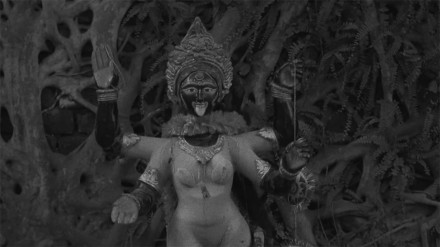
The Place Once Known as Earth and We, Homo Sapiens dissects the uneasy relationship between faith and the female body. Set across rural and urban India, the film interrogates how religion—often revered as a moral compass—quietly sustains structures of misogyny.
Through voices of artists, psychologists, journalists, and ordinary citizens, the film exposes how rituals, scriptures, and inherited beliefs shape a society where women are simultaneously deified and diminished. The grand celebration of Durga Puja becomes a central paradox: a culture that worships the divine feminine in the form of Goddess Durga, yet normalizes violence, control, and silence imposed upon real women.
Rather than positioning religion as a singular villain, the film examines complicity—how generations internalize and perpetuate these contradictions through upbringing, community, and fear of dissent. It questions whether devotion has become a veil—masking deeply ingrained hierarchies under the guise of tradition.
Blurring documentary with philosophical provocation, the film refuses comfort. It confronts the viewer with an unsettling inquiry: if belief systems continue to justify inequality, then what remains sacred—and for whom?