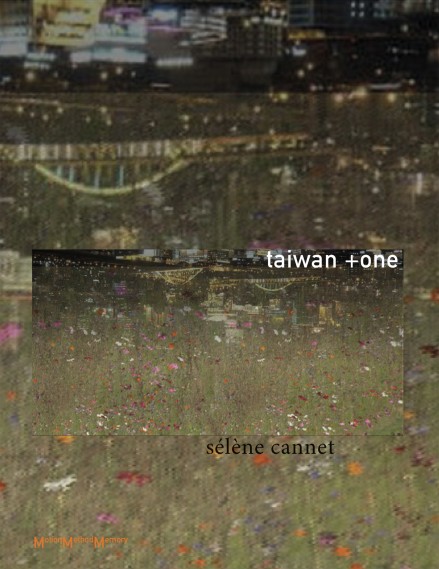
Taiwan+One
Stills
About
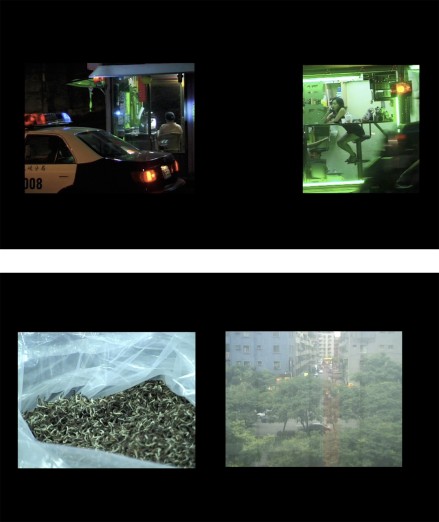
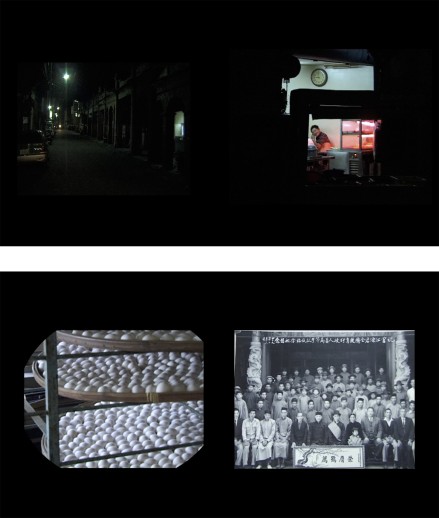
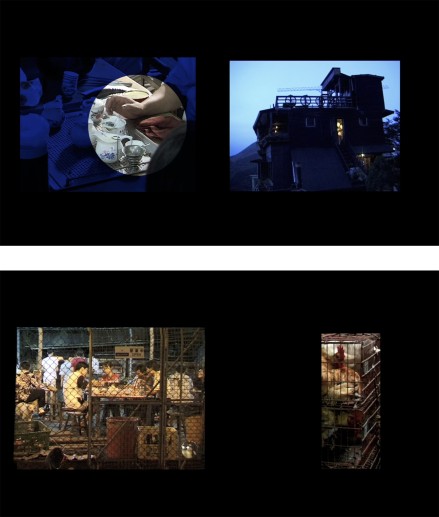
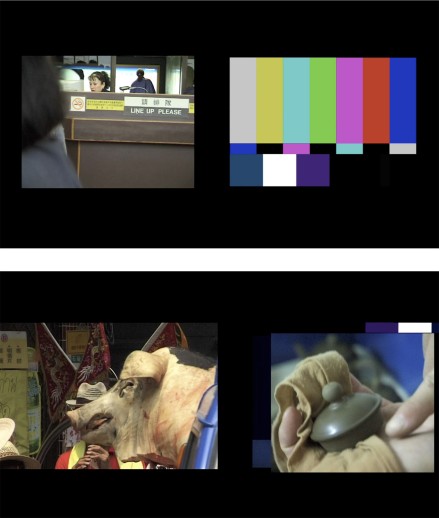
The tea master is a woman; she is Chinese, her hair is black and so are her eyes. Followed by a mysterious man she visits tea gardens and meets the women who pick the tea in the villages perched at the end of the island, or attends the feast of the gaudy pig. At night, they drive back to bustling Taipei and fish for shrimps amidst couples on motorcycles. Nine years later, a young woman edits the footage and reinvents stereography, revealing unprecedented sounds from the images.
This film explores the movement between digital video and High-Definition imagery. It is conceived as a kinetic interpretation of archival footage shot in Taiwan—capturing both the intense Asian urbanity of Taipei and the traditional world of tea enthusiasts and producers, home to the renowned Oolong (or "blue green" tea), once known as "Oriental Beauty." The film unfolds by deconstructing the image from within, tracing the infinite micro-movements that compose it and diffracting its spectrum of electronic colors. Devoid of voice-over commentary, linear chronology, or discursive demonstration, the film moves fluidly through a pluralistic, parallel montage—a novel take on "stereovision" that restores a new sense of virtuality to binocular sight.
The island is portrayed as a fantastical realm where places and figures undergo constant metamorphoses—a space where giants, puppets, toys, animals, and machines intersect amidst abrupt shifts in scale. Documentary footage is subjected to perpetual transformation through the juxtaposition or disjunction of individual shots. Editing here transcends mere temporal sequencing, manifesting instead as a diffraction of the frame itself. Figures emerge, only to vanish just as they begin to take on substance. Scripts and signs flicker across the screen like deceptive markers—cues that suggest a coherent discourse that yet remain fundamentally indecipherable.
A Film Without a Camera This project originated from twenty hours of footage captured on the island of Taiwan. In 1997, D. T. Pasqualini spent a week on the island, documenting various facets of tea: the harvesting and drying processes, the diverse uses of tea—such as infusing eggs—the craft and techniques behind teapot making, and ultimately, the sale of these goods. He was accompanied by tea master Yu Hui Tseng and Fabien Maïolino. Along the way, he filmed the daily lives of the Taiwanese people, urban landscapes, the hinterland, local cuisine, and even a *Qingcheng Jiao* ceremony—a tradition nearly two centuries old. Much later, he invited me to create a film using this accumulated material.